


For label management and development teams presenting their organisation at industry meetings.
Label presentation dossier for industry meetings
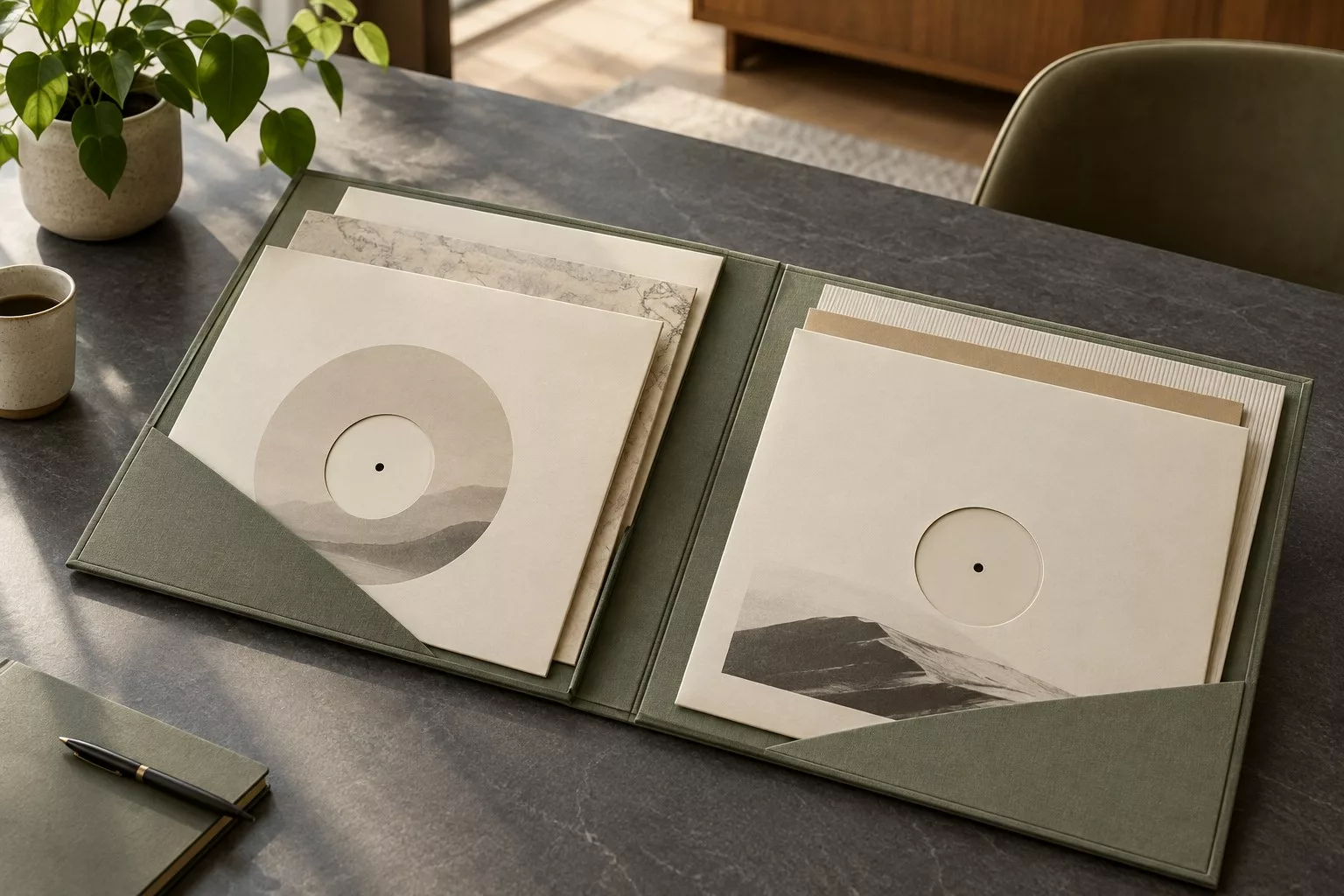
A single contact may like several artists without seeing what ties them together under the same label. The label presentation document explains that coherence, the people behind it and the projects that justify the meeting. Beathoven can assess support to structure this document using verified information from the team, with variants tailored to the specific meetings scheduled.
Present the organisation, not a collection of biographies
A label dossier does not replace its artists' EPKs (electronic press kits). It should make the editorial line, working methods and scope of activity easy to understand. It can present a small team without copying the communications of a major group. An accurate description of what is handled in-house and what relies on collaborations is more useful than an unsubstantiated list of skills.
The document should also be built around the meeting in question. Someone interested in a collective project will look for different information to a team trying to understand how a catalogue is organised. The factual core remains the same, while the order of examples and suggested questions can vary. The dossier is not intended to promise a deal or assert a professional relationship that does not yet exist.
Materials to gather before drafting
- An outline of the artistic direction with examples of releases that are actually available.
- A short timeline of milestones that illuminate the current situation.
- The team's roles and the points of contact able to continue the discussion.
- An overview of the repertoire, with selected listening links rather than an exhaustive list.
- Upcoming projects with their stage and level of confidentiality specified.
- A meeting objective phrased as a question or a concrete proposal.
Create a press kit that’s easy to navigate
- Define the recipient: clarify why this contact should receive a presentation of the label.
- Check the basics: Cross-check team information, releases, figures and projects against their sources.
- Choose the examples: select those that clarify the label’s identity.
- Organise the reading: give a short introduction, then supplementary details useful to the discussion.
- Prepare for use: approve the shareable versions and appoint the person who will update them.
Example: a label with two musical directions
Imagine a label that develops an electronic repertoire alongside acoustic projects. Presenting these two directions as an undifferentiated whole risks blurring its identity. The press kit can explain the principle that links them, then present two distinct trajectories with a limited number of examples. If no artistic link unites them, the label can simply describe two deliberate axes rather than inventing a façade of unity.
At a meeting focused on an acoustic project, that part of the repertoire can be presented first without obscuring the other activity. The team’s resources should still be described precisely: a project in preparation is not presented as a confirmed release, and an ongoing discussion should not be listed as an established partnership. This gives the reader a clear basis for questions.
A presentation ready for use
| Section | What the reader should understand |
|---|---|
| Identity | The label’s identity and what makes it visible |
| Repertoire | Accessible and relevant examples |
| Organisation | Who does what and who can respond |
| Discussion | The specific topic the meeting can take forward |
This preparation complements our support for labels and record companies. When the press kit mainly features existing recordings, consideration of the catalogue marketing for labels can help select the examples, within a distinct scope.
Frequently asked questions
Should all the label's artists be included?
Not necessarily in the main document. A justified selection and a roster supplement can make it easier to read.
Can the same press kit be used everywhere?
The core remains the same, but recipients and objectives may require a different order or additional content.
Does the presentation include introductions?
Only if another remit explicitly provides for it. The document can be prepared for meetings already organised by the label.
Clarify the structure.
Present your artistic direction, your team, planned meetings and the materials already available. We can review a press kit tailored to these exchanges, with a sign-off contact and a version that's easy to maintain.